
This post contains affiliate links. I earn a small commission from qualifying purchases at no extra cost to you. Thank you for your support!
Have you ever sat down at your sewing table, ready to make something beautiful, only to feel like you’re fighting with your tools? We have all been there! For the last ten years, my trusty old Janome Magnolia mechanical machine was my absolute best friend. We spent a decade together making memories—blankets for my three kids, little crafts, and so many projects for my shop. I loved that machine, and I don’t regret a single moment with it. It was reliable, sturdy, and always there for me.
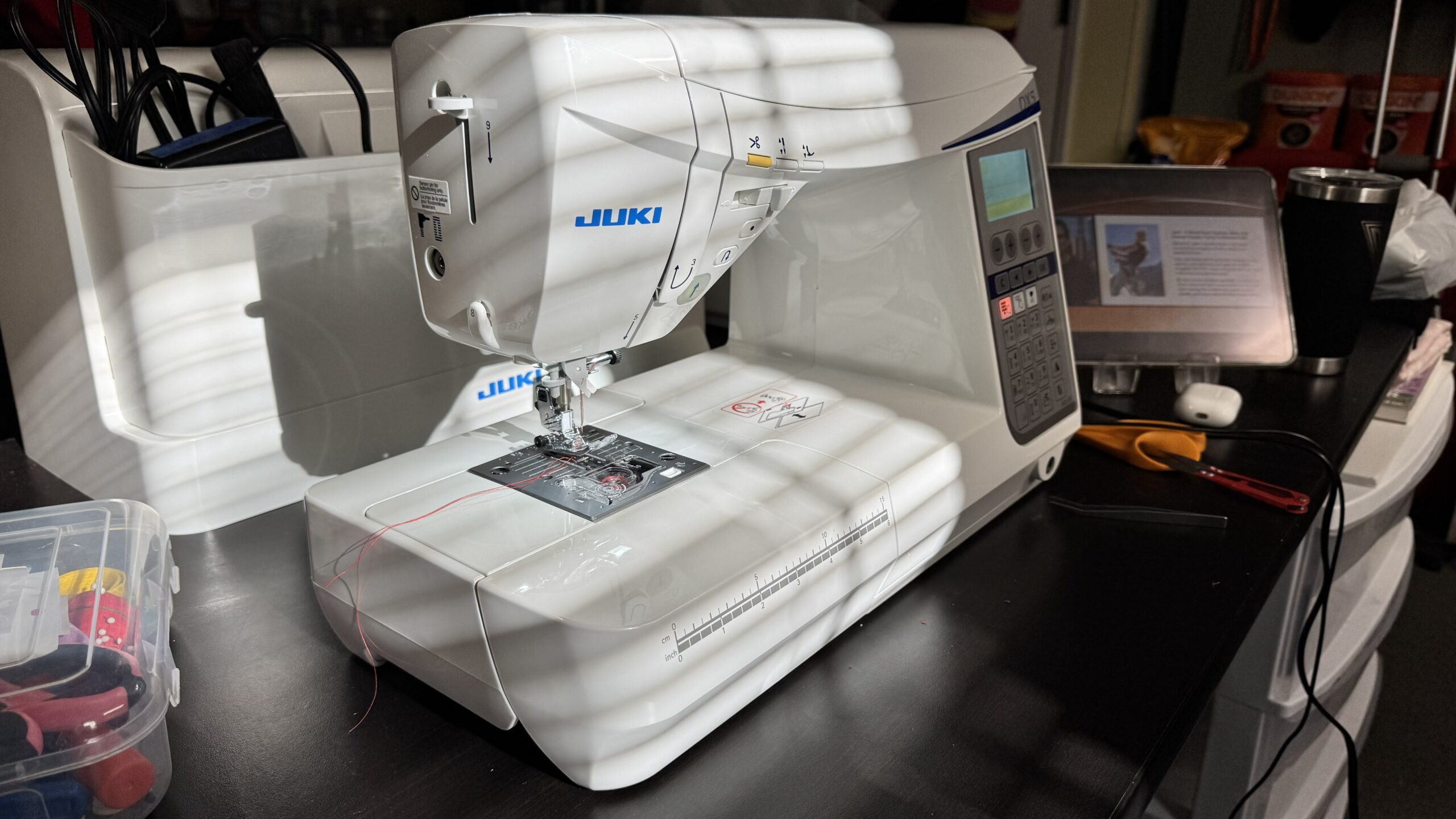
But as my life as a mom of three athletes got busier and my passion for sewing grew, I started to feel like I needed a helper that could keep up with my “mom brain.” I was ready for an upgrade that could handle the heavy lifting while I focused on being creative. Moving from a mechanical to a professional Computerized sewing machine – Juku HZL-DX5 felt like stepping into a whole new world. If you’ve ever felt like your machine is a bit “sticky” or slow, or if you’re tired of manually lifting the lever every time you turn a corner, let me tell you—this upgrade changes everything!
Art is how I speak when words feel a little too heavy. When my machine handles the hard parts, I finally have the space to let my imagination do the heavy lifting.
Keeping Your Hands Happy and Your Stitches Straight
When you are sewing a corner, do you hate having to let go of your fabric to lift the presser foot? It’s like being interrupted right when you’re about to say something important! When we stop and go like that, our stitches can get wiggly or uneven.
The best trick for this is something called an “automatic pivot.” Imagine your machine is a smart helper that knows exactly when you want to turn. When you stop sewing, the needle stays down in the fabric (so you don’t lose your place!) and the foot lifts up just a tiny bit all by itself. This lets you spin your fabric with both hands and keep right on going.
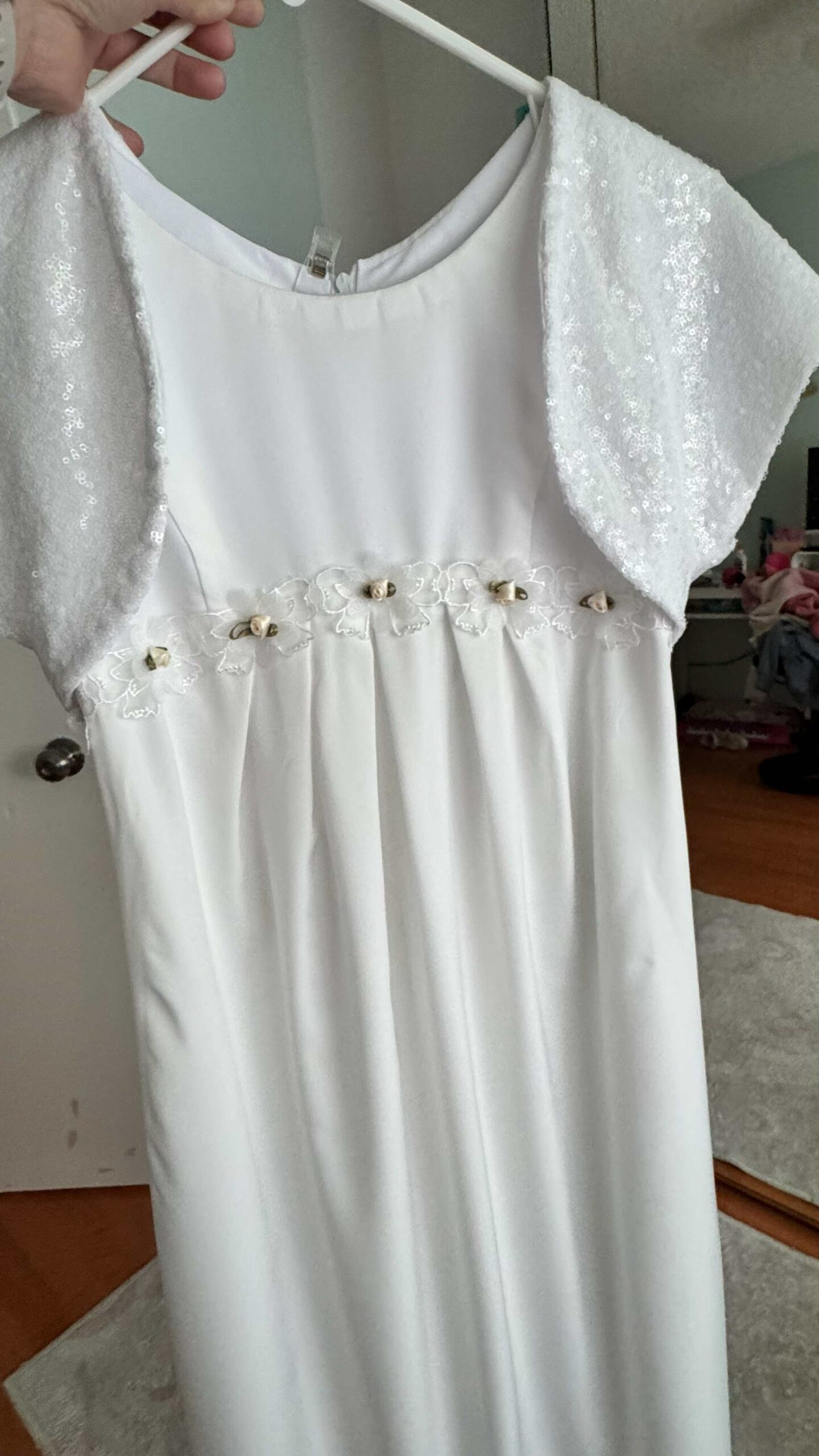
The very first project that I made using my new Juki HZL-DX5 Sewing machine
Tips for smooth turns:
- Trust the machine: Keep your hands on the fabric, not the lever.
- Focus on the curve: Because you aren’t stopping to lift the foot, you can guide your quilt or dress through those tricky curves much more easily.
- Stay in the zone: This keeps your “creative flow” going so you don’t feel tired or frustrated.
Making Perfect Buttons and Tidy Ends
If you sell your clothes in a boutique or on Etsy, you know that the “finish” is everything. No one wants to see messy threads hanging off a sleeve! Also, making buttonholes by hand can feel like a scary math test—one wrong move and the whole project is ruined.
A great solution is using a machine that has a “brain” or a sensor. A professional-quality computerized sewing machine can actually “sense” how thick your fabric is. It makes sure every single buttonhole is the exact same size and looks perfectly tidy. It even trims the threads for you when you’re done! It’s like having a tiny pair of scissors hidden inside that cleans up the mess for you.
How to get that professional look:
- Use the built-in fonts: If your machine has different fonts (some have 3 or more!), you can sew a name or a label right onto your project. It looks so much fancier than a marker!
- Let the sensor do the work: When making buttonholes, just set it and let the machine handle the measuring. It will be perfect every time.
Helping Your Fabric Stay Flat and Happy
Sometimes, when we work with very thin or “fidgety” fabrics, the machine wants to “eat” the cloth. The fabric bunches up or gets pushed down into the little hole where the needle goes. Oh boy, that is a mess to clean up!
To fix this, look for a machine with a specialized “slide plate.” This creates a totally flat, secure surface. It’s like a smooth bridge that the fabric can walk across without falling into any holes. This is a lifesaver for textile artists who use weird or delicate materials to make their art.
Ways to avoid fabric snags:
- Check your plate: Make sure your slide plate is closed and secure before you start on something thin like silk.
- Pick the right stitch: With a machine that has 185 stitch patterns, you can always find the one that “grips” your specific fabric just right.
When you have a sewing helper that handles the boring stuff—like lifting the foot and trimming the threads—you get to spend all your time being the amazing artist you are!
Leave a Reply